

Overgrown or weak trees pose safety risks and limit lawn light. This guide details professional tree pruning techniques—crown reduction, thinning, deadwood removal, crown lifting, and formative pruning—explaining how each enhances structure, safety, aesthetics, and vitality. Homeowners will learn optimal timing, cost factors, and how certified arborists deliver tailored care.
Professional arborists use specific pruning methods to manage height, density, and safety while preserving natural shape. These core services address overgrowth, canopy health, hazardous limbs, clearance, and young-tree development, adhering to industry standards.
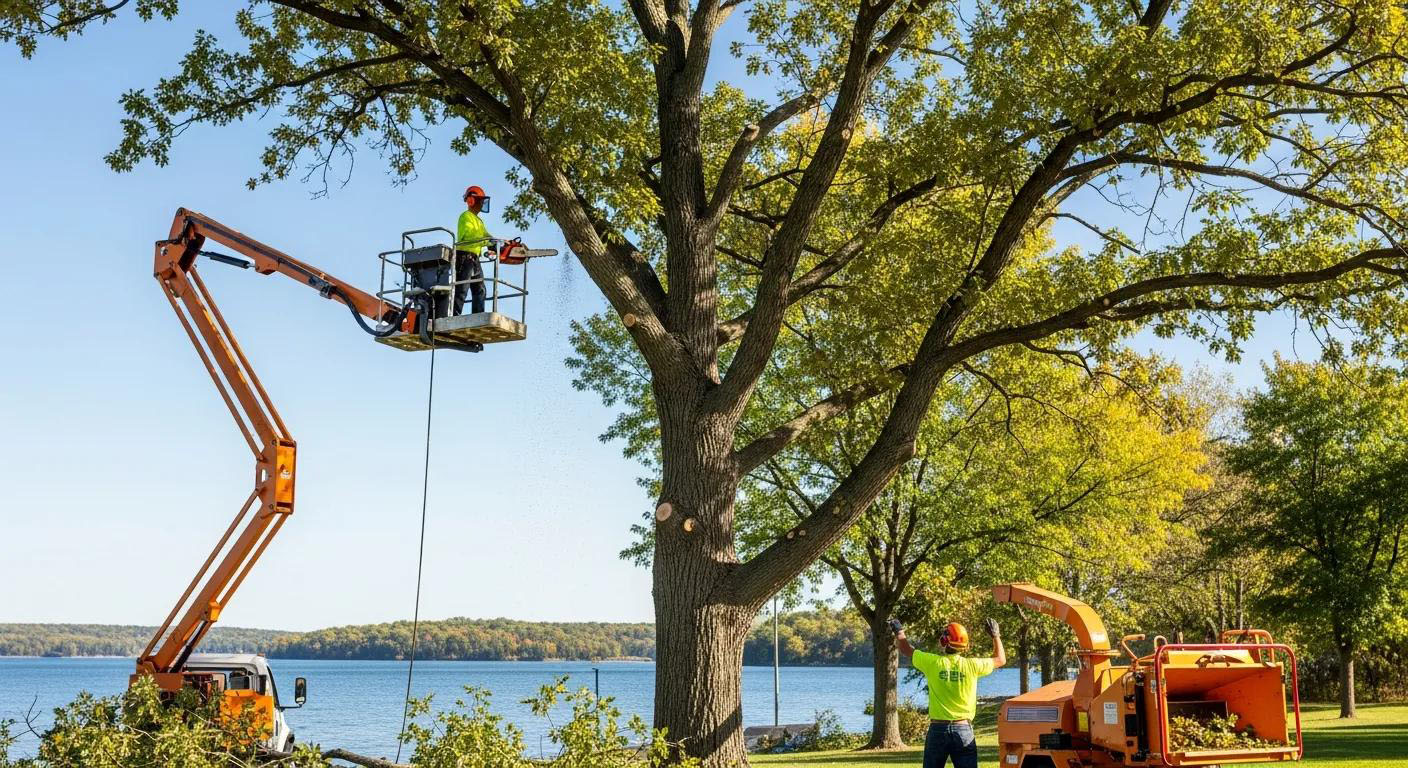
Professional arborists employ several key methods, each with a distinct purpose and benefit. Crown Reduction aims to reduce a tree's height and lateral spread, primarily limiting wind sail and shading. Thinning, also known as Crown Thinning, decreases crown density, which in turn improves light penetration and air circulation within the canopy. Deadwood Removal, or Crown Cleaning, focuses on extracting dead, diseased, or crossing limbs, thereby enhancing safety and disease control. Crown Lifting, or Crown Raising, involves removing lower branches to provide essential clearance and improve sight lines. Lastly, Formative Pruning guides the early branch structure of young trees, promoting balanced future growth and a strong architectural foundation.
Crown reduction reduces tree height and spread by strategically removing branch ends, maintaining the tree’s natural profile. Ideal for trees encroaching on structures or power lines, it prevents storm damage and preserves health by alleviating weight on critical limbs.
Thinning removes selective live branches to increase light penetration and air flow, reducing fungal disease risk and promoting inner leaf development. This targeted light management technique contributes to stronger branch unions and overall canopy stability.
Deadwood removal extracts non-viable or hazardous wood, minimizing falling-branch risks and eliminating breeding grounds for pests. This enhances safety, halts disease vectors, restores aesthetic appeal, and extends a tree’s lifespan.
Crown lifting raises the lower canopy by removing basal limbs, creating clearance for vehicles, footpaths, and buildings. It prevents abrasion damage, improves sight lines, enhances ground-level aesthetics, and aids under-canopy planting.
Formative pruning shapes juvenile trees by selecting a central leader and strong scaffold branches. This proactive technique reduces future risk of included bark and weak crotches, guiding trees into stable mature forms and lowering the need for corrective pruning later.
Each pruning method targets specific improvements that bolster tree well-being and mitigate hazards. These services preserve canopy strength, reduce storm-related loss, and ensure safe proximity to buildings and utilities.
Each pruning method offers distinct structural effects and safety outcomes. Crown Reduction structurally reduces the lever force on branches, which in turn lowers the risk of breakage. Thinning improves wind passage through the canopy, thereby decreasing the potential for wind-throw. Deadwood Removal eliminates decay-prone branches, directly removing falling limb hazards. Crown Lifting elevates the canopy off surfaces, protecting roofs and pathways from damage. Finally, Formative Pruning establishes strong branch angles in young trees, preventing future failures caused by included bark.
Crown reduction shortens outer limbs, reducing mechanical stress and restoring a balanced canopy. This fosters thicker branch collars and reinforces attachment points, resulting in a more compact, wind-resistant structure.
Selective thinning allows wind to pass through the canopy, lowering wind-throw potential. Improved light and air circulation inhibit fungal growth and moisture-related decay, while removing crossing branches eliminates friction points that invite pathogens.
Removing deadwood eradicates unpredictable falling branches, safeguarding people and property. Clearing decaying limbs stops wood-rotting fungi from spreading and restores a tidy silhouette, revitalizing a lawn’s appearance.
By trimming lower branches, crown lifting opens sight lines for driveways and security cameras, and allows safe passage for vehicles and pedestrians. It also enhances under-tree planting options and simplifies lawn upkeep.
Correct pruning timing maximizes wound closure and minimizes sap loss. In Brainerd, MN, most deciduous species respond best to cuts during the dormant season (late autumn through early spring). However, specific operations and species have distinct seasonal considerations.
Crown reduction and thinning are optimal in late winter, before bud swell, for rapid callus formation and reduced insect attraction. Summer thinning is for urgent concerns only, as heavy cuts can cause stress.
Most songbirds nest between March and August. Significant pruning during this period can destroy active nests and contravene wildlife protection regulations. Non-urgent work should be delayed until after the fledging season.
Nic's Works employs certified arborists who follow industry best practices and local regulations. Risk assessments precede every job, and bespoke method selection aligns with homeowner objectives. Strict safety routines, PPE use, and clear communication ensure reliable, tailored tree care.
Our tree surgeons hold recognized certifications and adhere to national standards. Rigorous risk assessments, exclusion zones, and industry-approved safety gear prevent accidents. Regular equipment inspections and on-site briefings minimize incidents.
Consultations assess property goals—clearance, enhanced light, aesthetics, or longevity—then match methods to those objectives. Custom schedules and species-specific considerations ensure each tree receives the right treatment.
Pricing reflects tree size, method complexity, and access conditions. Quotations consider arborist hours, equipment, and safety measures. Cost factors include tree height, canopy density, location logistics, and any emergency or permit needs.
Several factors influence the cost of professional tree trimming. Tree Height is a significant factor, as taller trees require longer rigging and lifts, which increases both labor and equipment fees. Canopy Density also plays a role; denser canopies necessitate more thinning or reduction cuts, thereby raising the time allocated for the job. Access Difficulty, involving complex rigging and setup, adds to safety and equipment charges. For Emergency Response, such as out-of-hours or urgent work, a premium service rate is applied. Finally, Permit Requirements, which involve obtaining local authority approval, may incur additional administrative fees.
Crown reduction and thinning costs rise with increased crown volume and number of cut points. Denser canopies require additional time, and proximity to structures dictates rigging complexity.
Emergency pruning or storm-damage responses carry out-of-hours or rapid-deployment premiums, reflecting readiness, short-notice travel, and potential overtime.
Selecting a pruning method depends on identifying specific tree problems—overgrowth, shading, safety hazards, or formative needs—and matching them to technical solutions. Consider desired height control, light enhancement, risk reduction, and long-term shape guidance.
Crown reduction addresses excessive canopy spread that blocks sunlight or threatens property. Reducing top weight prevents branch failure and lowers tree stress from wind resistance.
Thinning excels when inner foliage is sparse or fungal growth emerges. Selective removal revitalizes airflow and light distribution, reducing pest pressure and stimulating robust new growth.
Targeted removal of dead or weak branches eliminates unpredictable failure points, protecting people and property. Clearing decayed wood also halts disease progression into live tissues.
Crown lifting is necessary when lower limbs interfere with driveways, rooflines, or lawn features, creating specified clearance heights to prevent structural damage and facilitate traffic.
Homeowners often ask how each technique compares, which suits urgent safety versus aesthetic goals, and what seasonal or species limitations apply. Concerns revolve around potential harm to tree health, recovery timelines, and cost transparency.
Nic's Works LLC
954 Poplar Drive
East Gull Lake, MN 56401
218-270-0861
